Migrating Player Libraries from Bethesda.net to Steam
Design leadership for a high-risk, irreversible account migration
At a Glance
Role: Design Manager
Team: One Product Designer
Timeline: Approximately six weeks from design through launch
My contribution: Design direction, UX-flow approval, accessibility review, risk management, and cross-functional alignment
Outcome: A live migration experience used by Bethesda.net players
Context
In 2022, Bethesda retired its PC launcher and enabled players to transfer their game libraries to Steam. The migration included games, expansions, DLC, wallet balances, virtual currencies, subscriptions, and selected player data.
The central UX challenge was trust. Players needed confidence that they were connecting the correct accounts and would retain access to content they had already purchased.
The Challenge
The migration was built on an existing account-linking system with known usability problems. Account linking was already a major source of Customer Support contacts. Players could unknowingly use a secondary Bethesda.net account or connect a Steam account associated with another profile.
Additional constraints included:
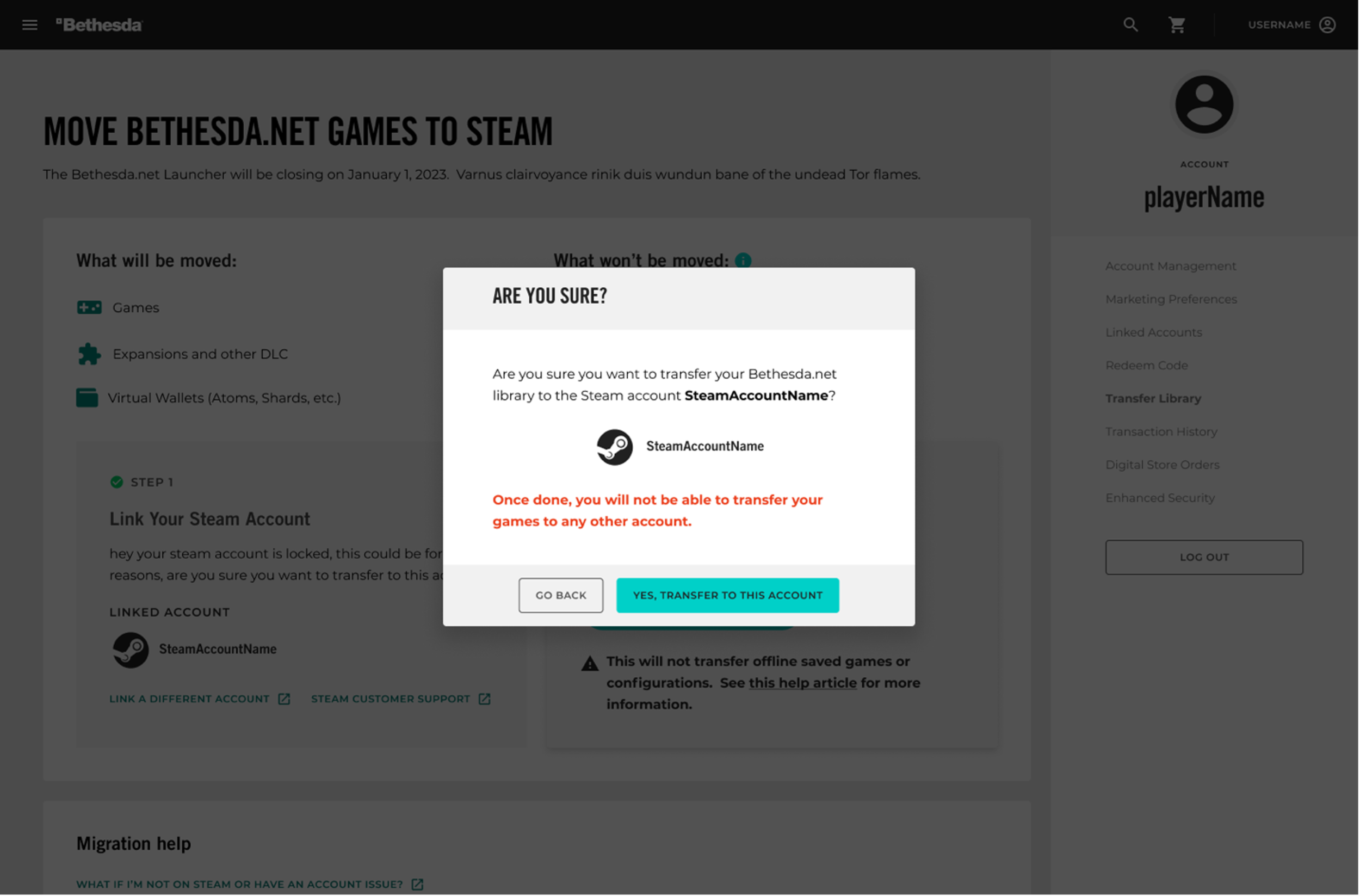
Transfers were permanent and could not be reversed.
Games and entitlements could transfer at different speeds.
Players were not automatically notified when processing finished.
Some saved progress required separate, game-specific steps.
The broader account system could not be redesigned within the deadline.
Backend development and UX design proceeded in parallel.
My Role
One Product Designer created the detailed user flow and interface mockups using the established Bethesda.net style guide.
As Design Manager, I supervised the work, provided design direction, reviewed and approved the end-to-end flow and final solution, and supported accessibility throughout the process.
I worked closely with the Product Director and Development Directors to balance player needs, technical constraints, and the accelerated delivery schedule.
User Flow

The Product Designer created the detailed migration flow under my supervision. I reviewed the structure, critical states, risks, and overall readiness before approving the solution.
Our Approach
Our reviews focused on the most consequential parts of the journey:
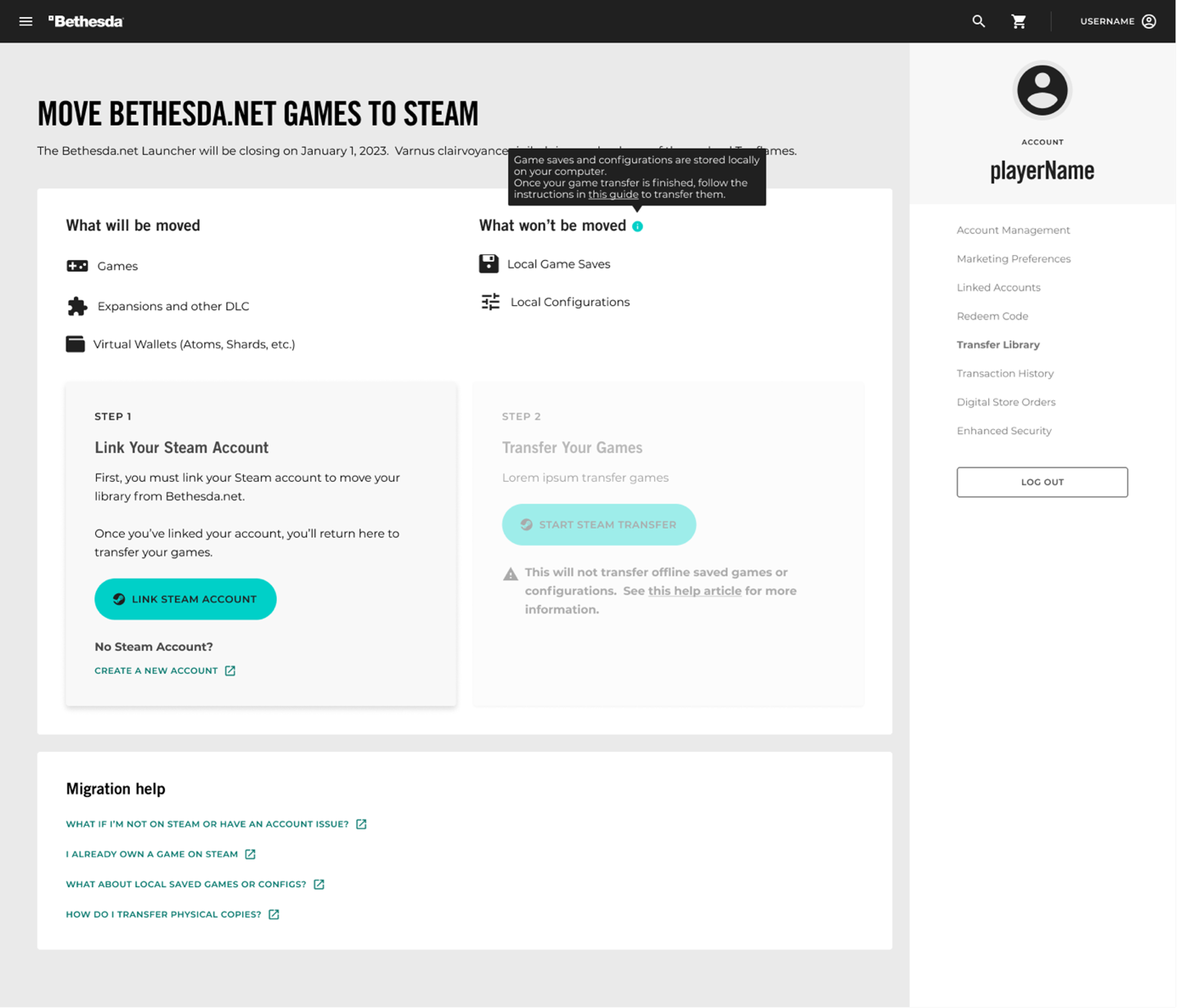
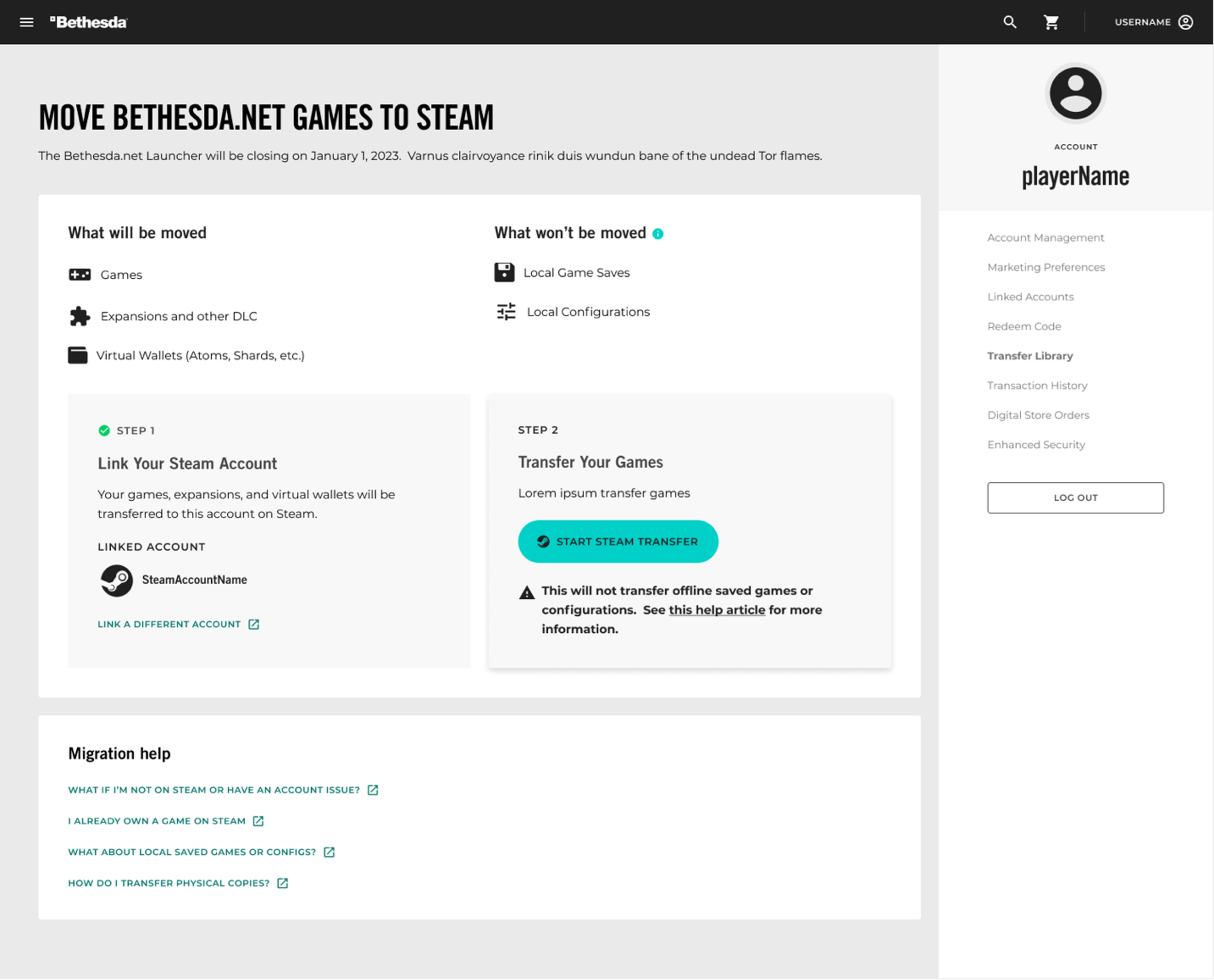
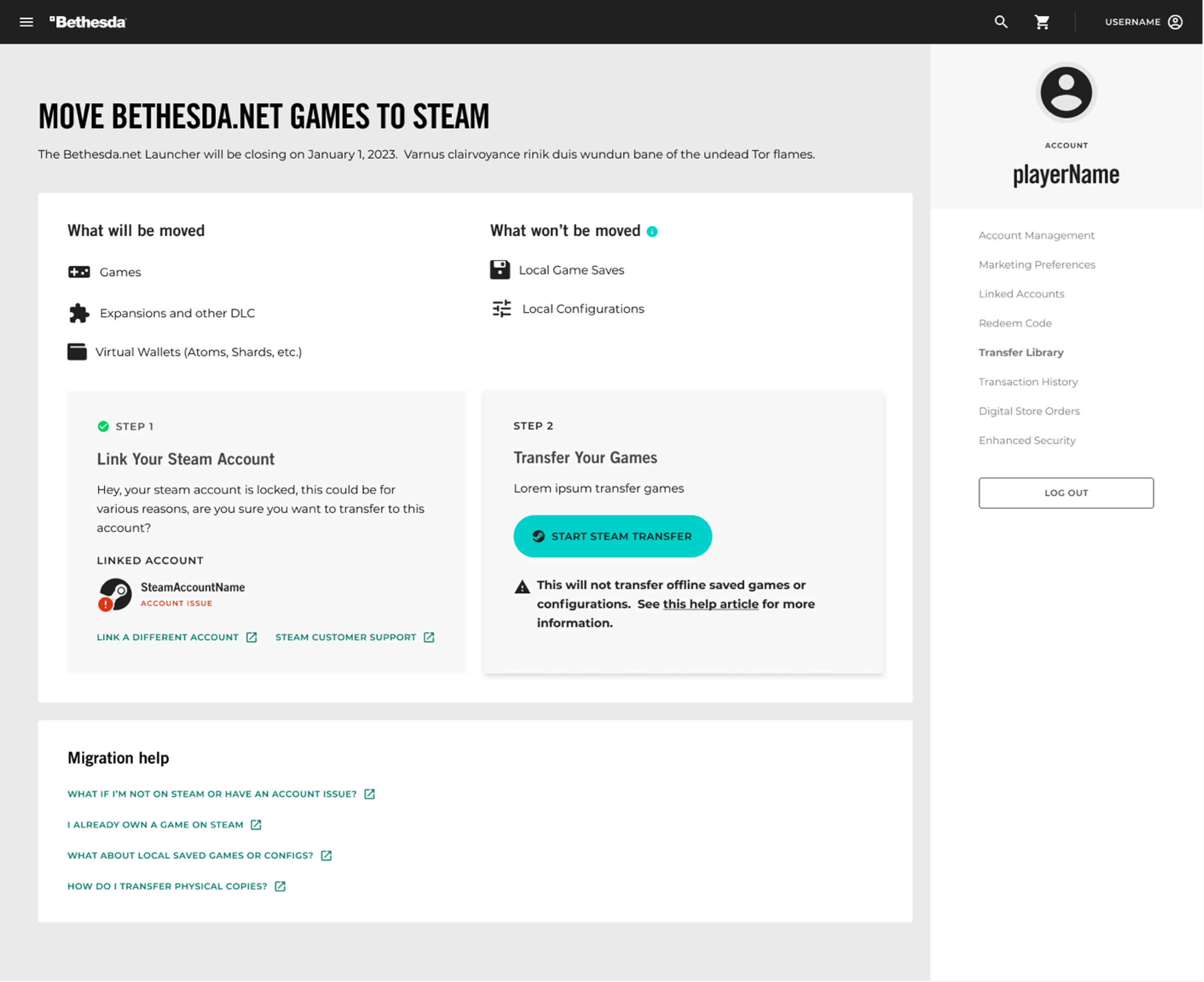
Clearly identifying the connected Bethesda.net and Steam accounts
Explaining what would and would not transfer
Communicating that the migration was permanent
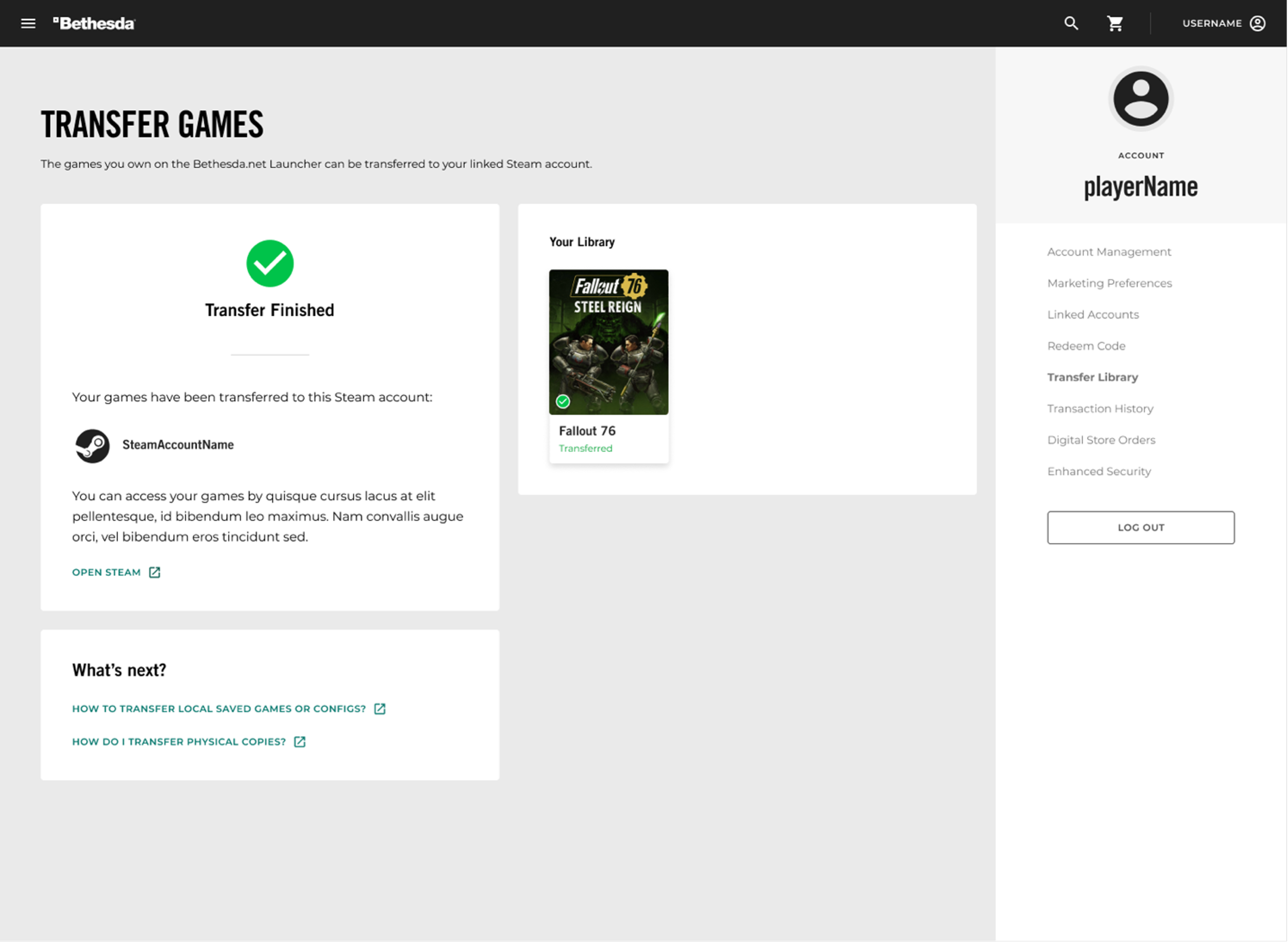
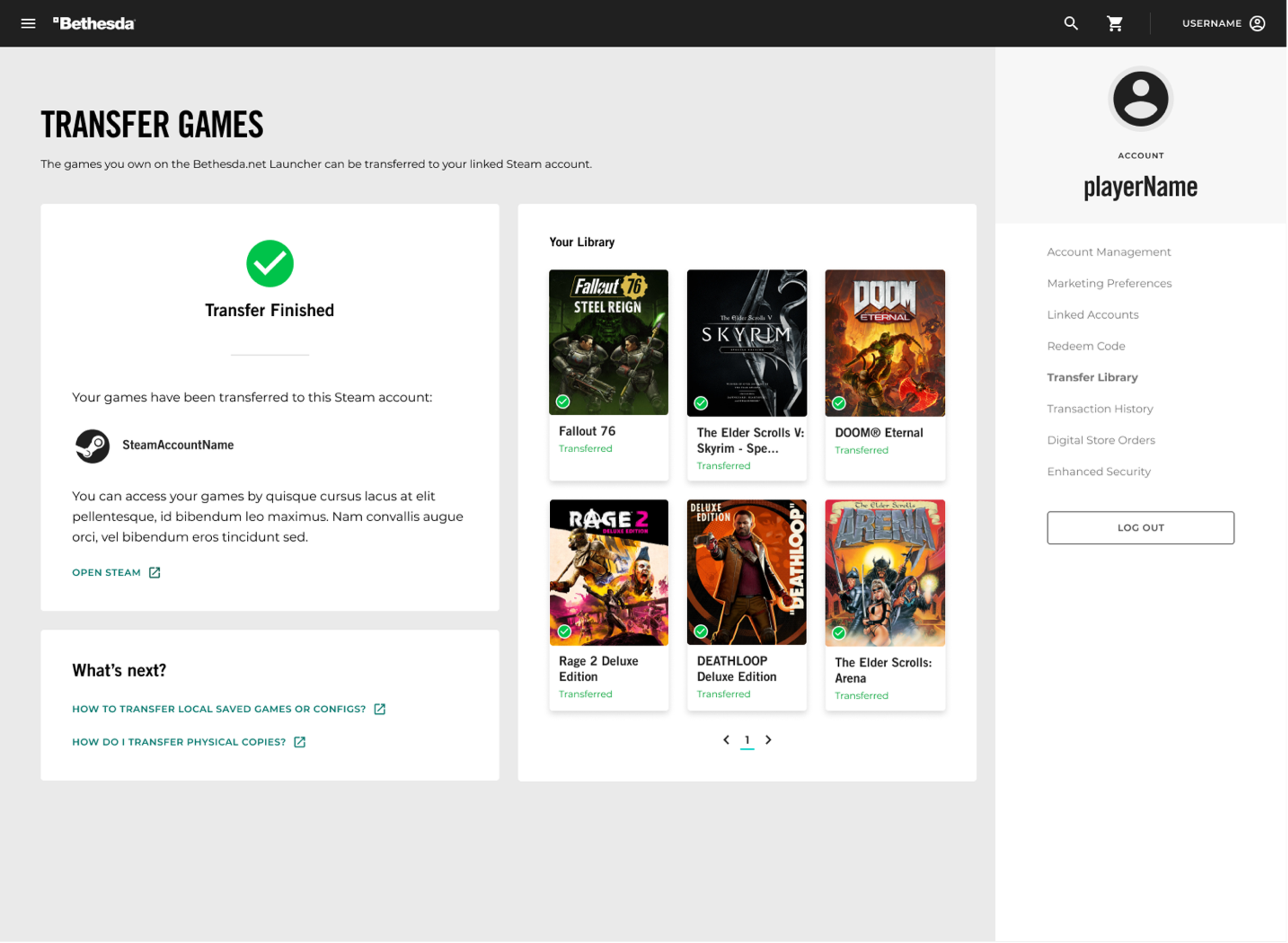
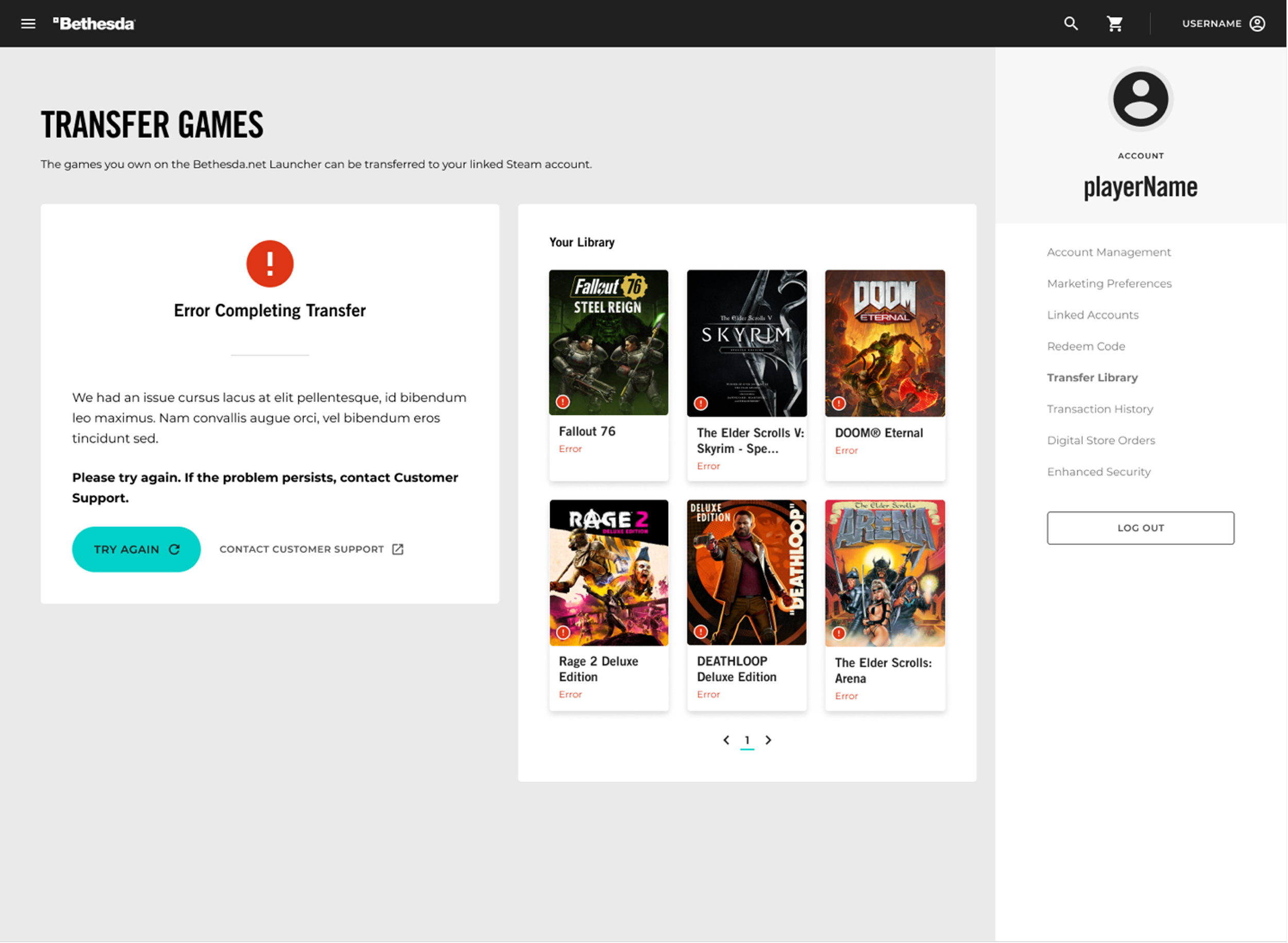
Providing progress, success, and error states
Allowing players to leave and return while processing continued
Creating clear recovery and Customer Support paths
Making critical warnings, actions, and status information accessible
Key Leadership Decision: Making Progress Visible
The initial technical proposal displayed only the final transfer result. I challenged this approach because migrations were asynchronous: individual games could complete at different times, and service delays could extend the process.
Without an intermediate state, players could interpret the lack of a result as a failure, repeat the action, or contact Customer Support unnecessarily.
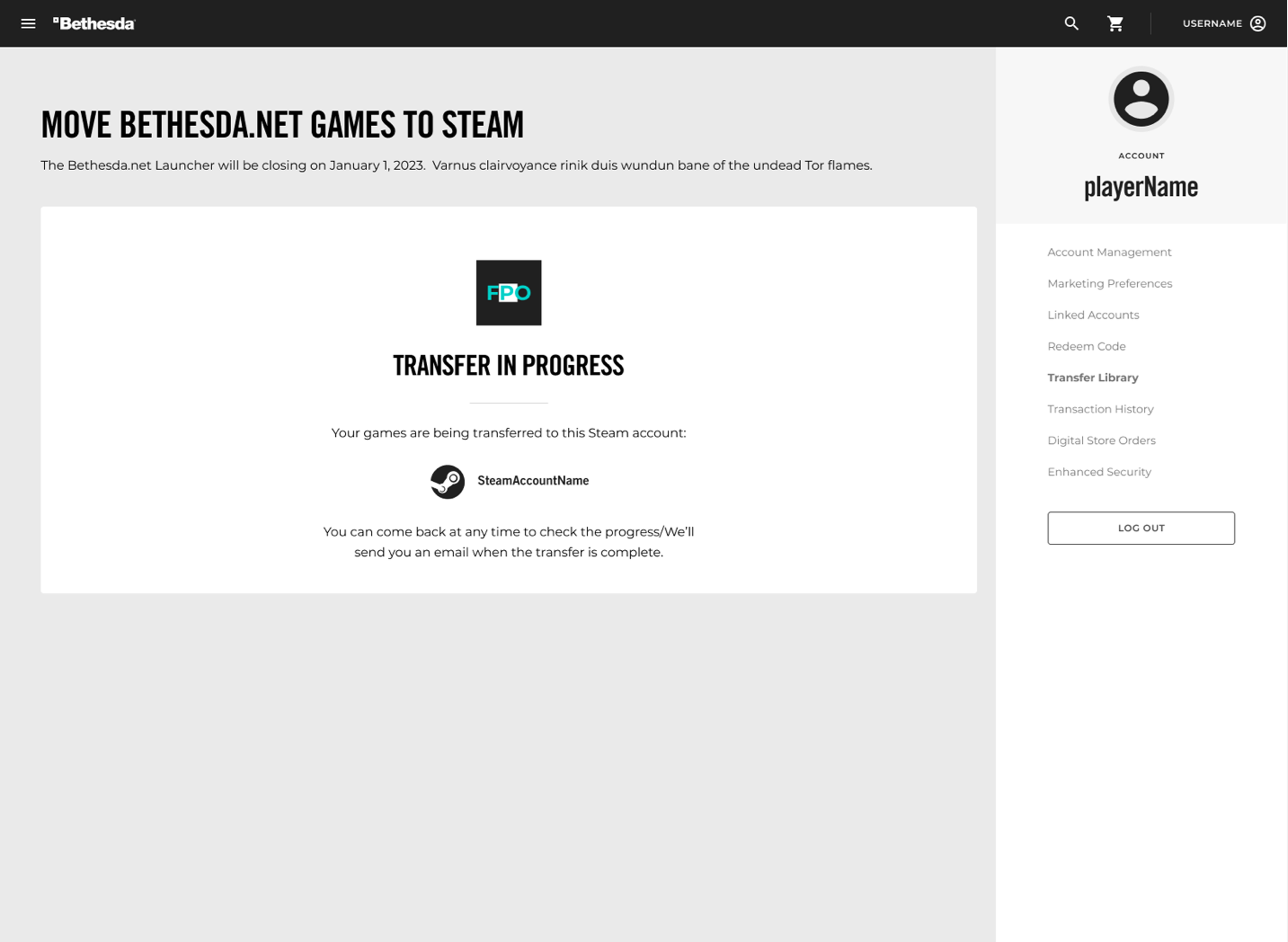
I advocated for a clear Transfer in Progress state that:
Confirmed that the transfer had started
Explained that processing could take time
Allowed players to leave the page safely
Told them where to return to check progress
Distinguished an active transfer from an error
This state was incorporated into the shipped experience.
Final Experience
The final designs followed the Bethesda.net style guide and provided clear differentiation between verification, processing, success, and error states.
Working Within Legacy Constraints
The project exposed broader weaknesses in the account-linking experience that could not be resolved within the six-week timeline.
We raised these risks with leadership and used the migration experience to reinforce the need for a future account-system redesign. This required balancing two responsibilities: delivering a safe experience within the existing architecture while advocating for longer-term structural improvements.
Outcome
The migration experience launched and allowed players to transfer eligible games and digital content to Steam.
I did not have access to formal success metrics. Migration-related questions initially became a major source of Customer Support contacts and declined after the initial launch period. Incorrectly linked accounts remained a persistent issue.
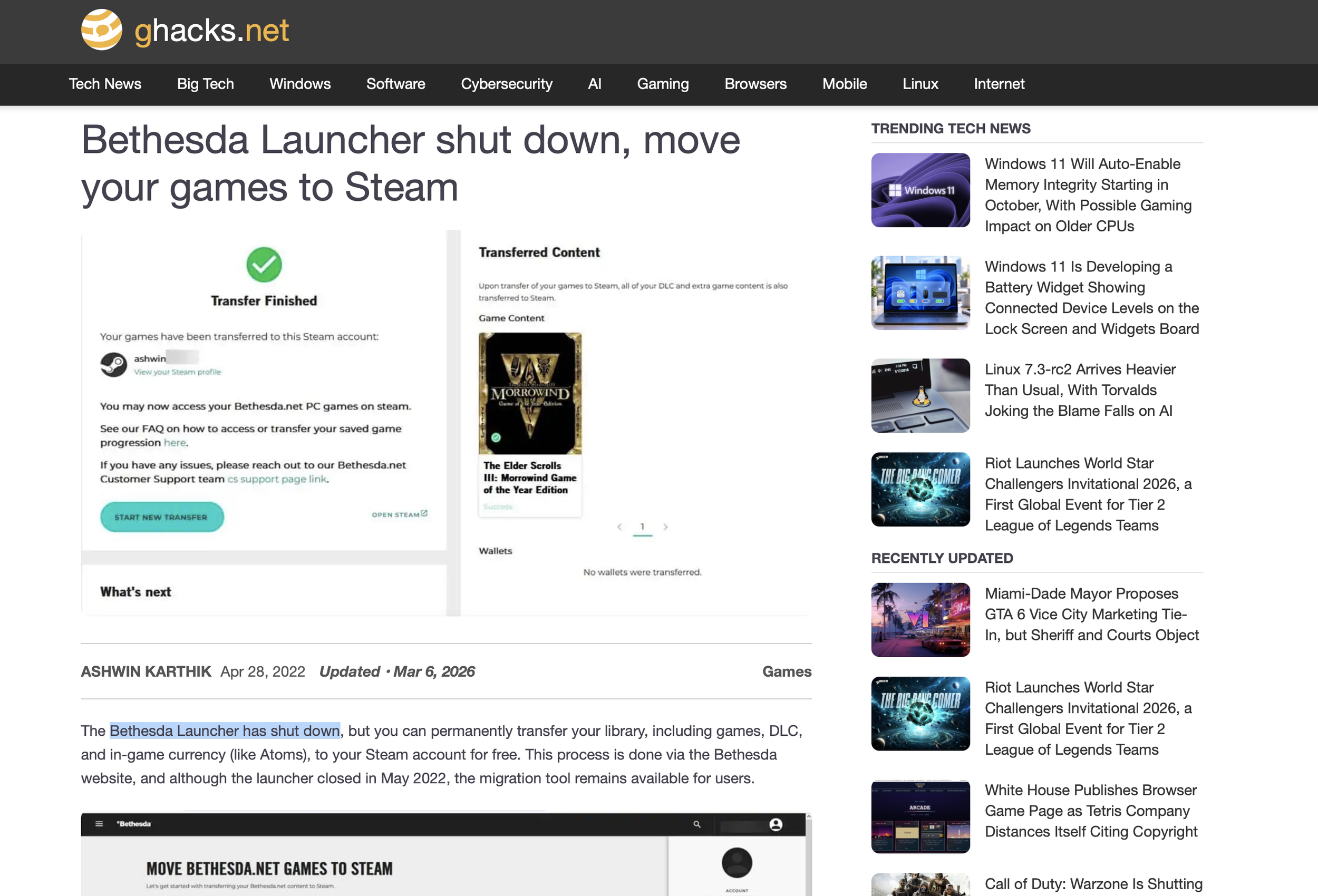
An independent player walkthrough provides public evidence of the live experience. The player completed the migration without assistance, confirmed that his games and Fallout 76 Atoms transferred successfully, and described the process as easy and fast.
What This Demonstrates
Design leadership under an accelerated deadline
Supervision and support of a Product Designer
UX risk management for an irreversible transaction
Close collaboration with Product and Development leadership
Accessibility oversight
Parallel design and engineering delivery
Decision-making within legacy-system constraints
Advocacy for long-term platform improvements